NEW APUL REPRESENTATIVE IN ISIA
THE INTERNATIONAL SNOWSPORTS ENVIRONMENT IS CONSTANTLY EVOLVING — AND WITH IT, THE ORGANIZATIONS THAT SET THE STANDARDS FOR TRAINING, QUALITY, AND PROFESSIONAL PRESTIGE AMONG INSTRUCTORS. PROBABLY THE MOST SIGNIFICANT ORGANIZATION IN THIS REGARD IS THE INTERNATIONAL SKI INSTRUCTORS ASSOCIATION, KNOWN AS ISIA. ISIA BRINGS TOGETHER NATIONAL ASSOCIATIONS OF PROFESSIONAL SKI INSTRUCTORS FROM AROUND THE WORLD AND CREATES A COMMON FRAMEWORK FOR EDUCATION, CERTIFICATION, AND PROFESSIONAL MOBILITY OF INSTRUCTORS ACROSS COUNTRIES.
ISIA and its mission
ISIA was founded in 1971 and is now the leading international authority in the field of professional instruction in skiing and other snow sports. Its primary mission is to establish and uphold high professional standards for instructors, promote safety in instruction, share expertise among member countries, and enhance the prestige of the teaching profession.
The organization also strives to ensure that instructors’ qualifications are mutually recognized among member countries. This is precisely why the ISIA Standard system and the associated international ISIA Card and ISIA Stamp were created years ago. Both serve as internationally recognized proof of professional qualification for instructors who meet ISIA standards, and their holders can be found in the ISIA database, which is managed and updated by national organizations.
Technical cooperation among the various associations also plays an important role. ISIA regularly organizes congresses, assemblies, working groups, and professional meetings where topics such as teaching methodology, safety, digitization, educational systems, and the future of snow sports in general are discussed.
ISIA structure
ISIA operates as a democratic international organization comprising member associations from individual countries. Its highest governing body is the General Assembly, where member countries have their own delegates and voting rights.
The executive branch of the organization is the ISIA Presidium. It consists of the president, vice presidents for various regions of the world, the treasurer, and several advisors. In addition, there are specialized committees—such as the technical, legal, and financial committees—which prepare the groundwork for strategic decisions and address specific technical issues.
Elections to the Presidium are held once every four years during the General Assembly. It is these meetings that often have a significant impact on the future direction of the entire organization. In addition to formal proceedings, informal discussions, networking, and international cooperation among the various associations are also of great importance.
ISIA & APUL RELATIONSHIP
APUL represents the Czech Republic in ISIA. APUL has been a full member of ISIA since 1994 and has long been involved in implementing its standards in the Czech Republic.
ISIA membership offers APUL a number of benefits—ranging from international prestige and the opportunity to help shape the future of global snow sports to access to the latest trends and expert information. For Czech instructors, it is also important that the APUL training system meets ISIA’s international requirements, which facilitates professional opportunities abroad and the theoretical recognition of APUL licenses outside the Czech Republic.
At the same time, however, this is not merely a matter of “formal membership.” APUL was already represented on the ISIA’s executive body at the beginning of the millennium. Jiří Kotaška, one of APUL’s founders, served on the Presidium for several terms. In recent years, APUL has become increasingly involved in active work within the organization, not only through participation in congresses and meetings, but also through work in expert committees, particularly the technical committee, where our head of education is directly involved in the development of international standards.
ISIA General Assembly 2026 in San Marino: Important Elections and a Huge Success for APUL
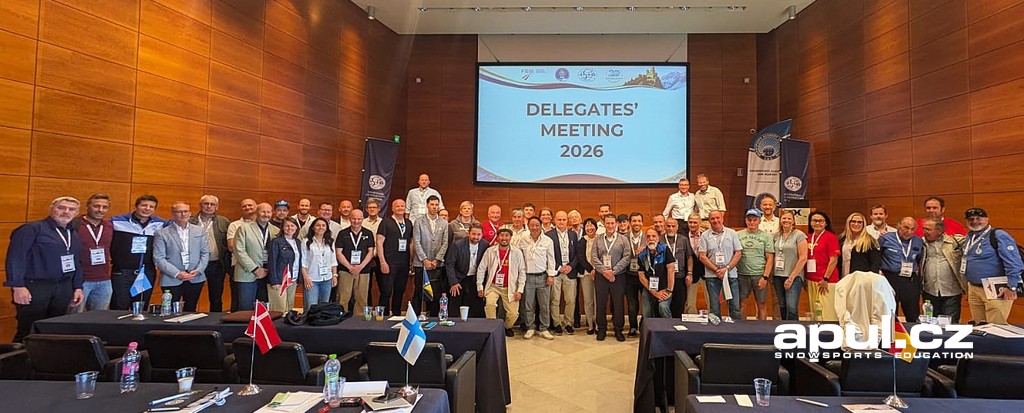
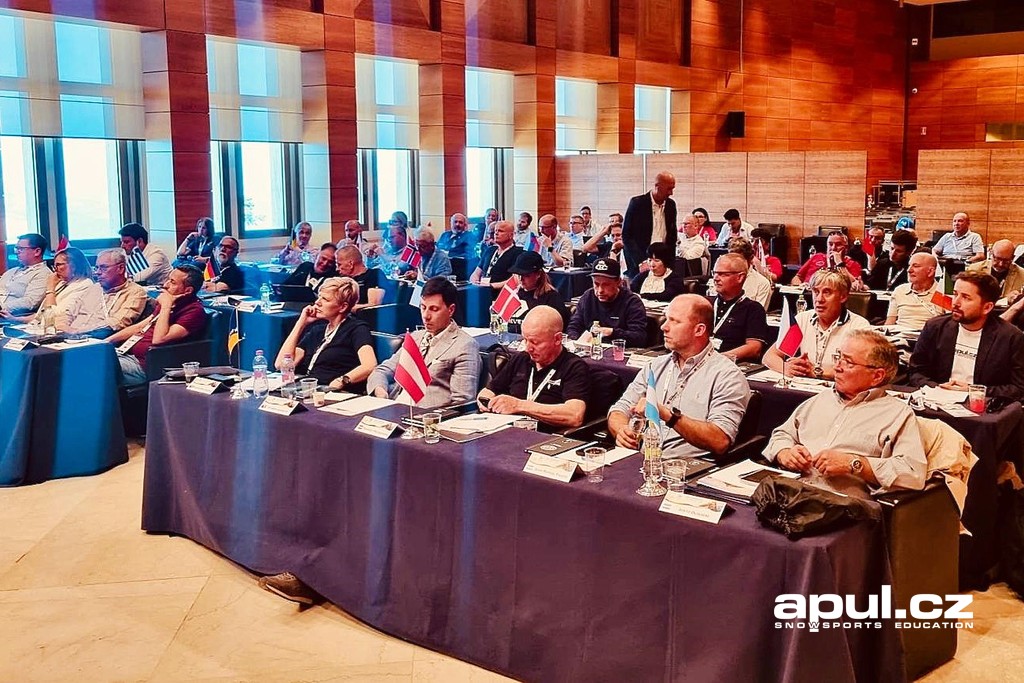
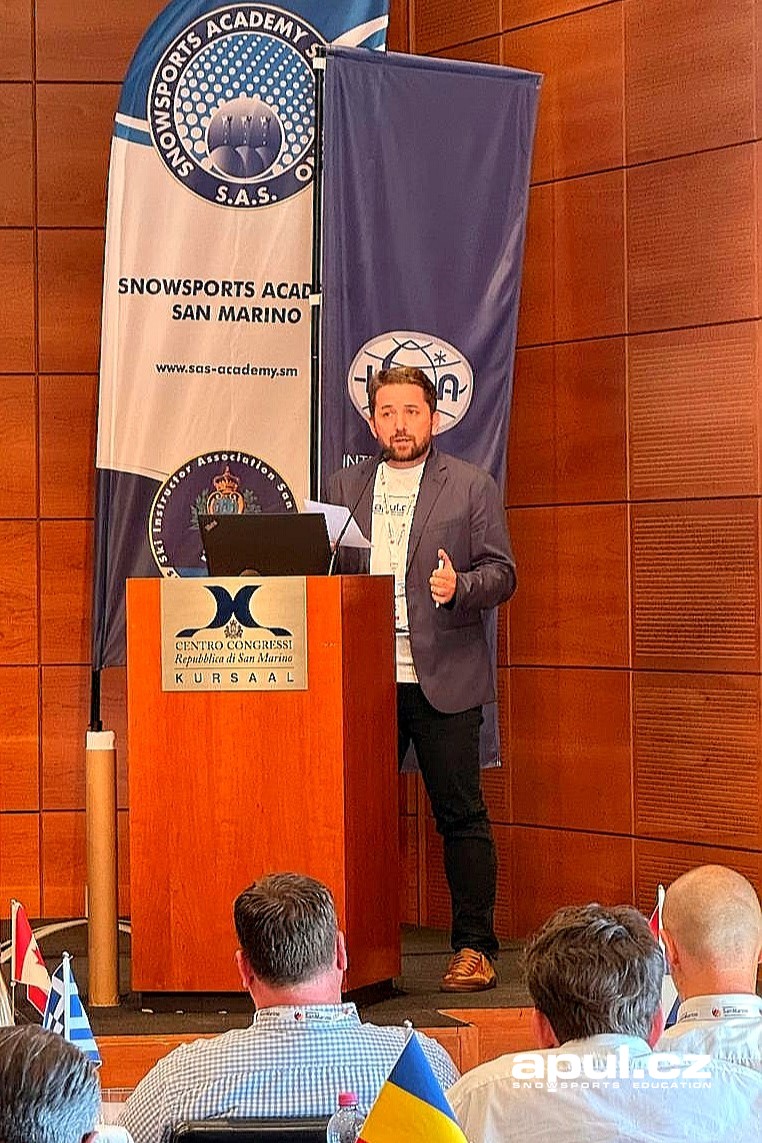
The ISIA General Assembly, which included elections, took place in San Marino from May 22 to 24, 2026. The event was of exceptional importance—not only because of the regular election of the organization’s new leadership, but also because of the proposed amendments to the bylaws and other strategic issues that will shape the future of the entire organization.
The APUL Executive Committee therefore decided to send a three-member delegation consisting of Jiří Kotaška, Tomáš Peslar, and Michael Turek. It was Michael Turek who ran for the position of advisor to the ISIA Executive Committee.
The meeting was attended by nearly 70 delegates from most of ISIA’s major member countries—ranging from European skiing powerhouses to North and South America and Japan. Representatives from Interski International and other prominent figures from the global snow sports community were also in attendance.
The first day was devoted primarily to working meetings and discussions regarding proposed amendments to the ISIA bylaws. Topics discussed included, for example, the issue of a second language at the Full Cert level and the planned ISIA Day as part of the upcoming Interski Congress in Vail in April 2027.
Saturday had a more festive atmosphere. The local instructors’ association celebrated its 20th anniversary, and the program included a variety of social and sporting activities. Delegates had the opportunity to participate in a “Skate to Ski” workshop focused on inline skating techniques and their connection to skiing technique. In the evening, a gala dinner was held, during which growing nervousness ahead of Sunday’s elections and intense behind-the-scenes negotiations were already palpable.
The most important part of the program took place on Sunday. In the morning, the regular general assembly was held, featuring reports from the various committees, with a focus on the digitization of the ISIA Card and the need to update membership databases. The issue of ISIA’s future prestige and branding also received significant attention.
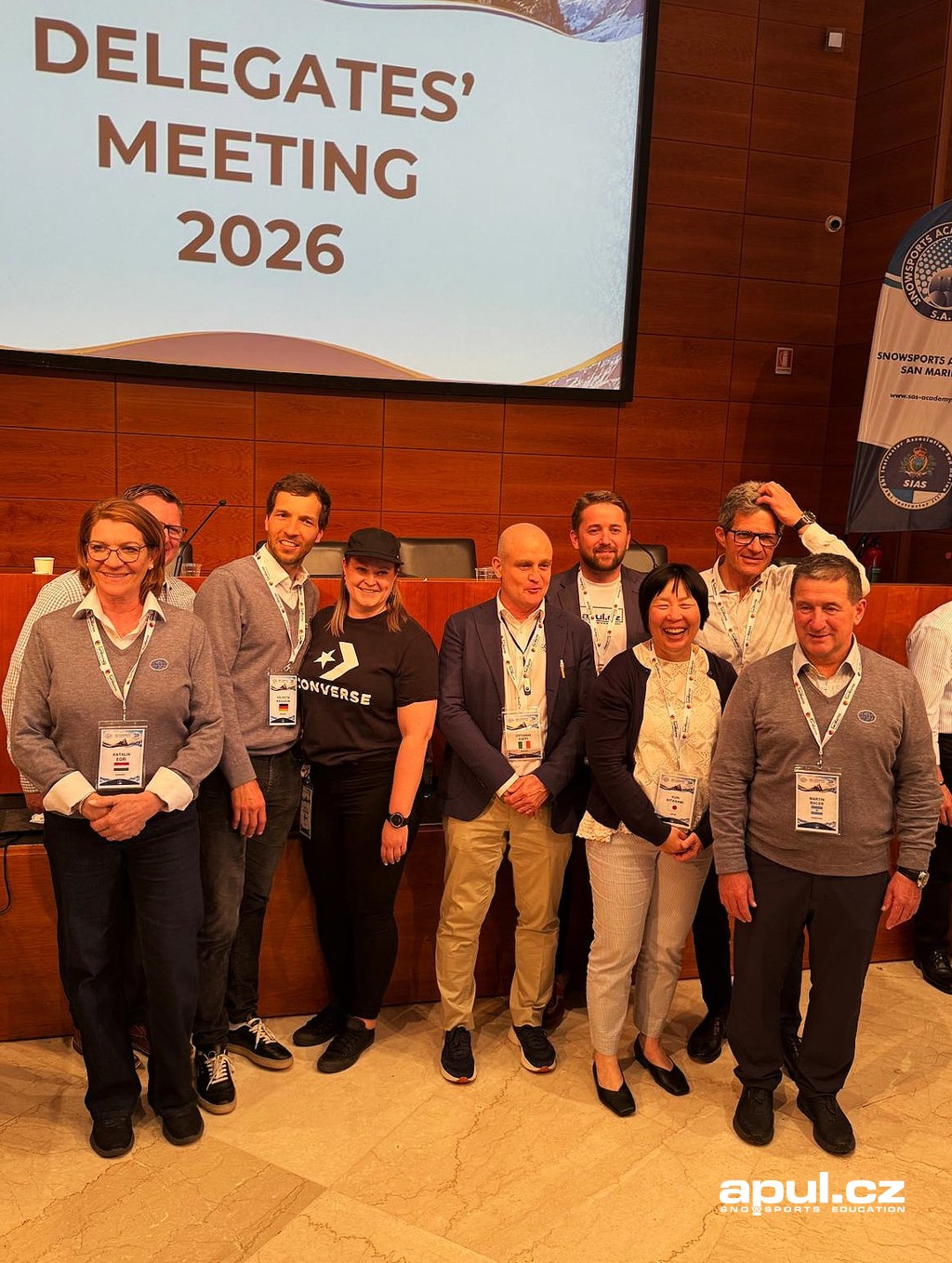
The election meeting itself took place that afternoon. Although the proceedings were marred by procedural disputes and delays regarding the voting rights of certain delegates, the election was successfully concluded. Vittorio Caffi was elected president of ISIA, thereby retaining his position.
For APUL the election had an even greater significance. Following a close vote, Michael Turek was elected to the ISIA Presidium. After a hiatus of several years, the Czech Republic will once again have a representative on the organization’s leadership—only the second time in its history.
This achievement has much broader implications than just the position itself. As a result, APUL gains better access to up-to-date information, greater influence over developments within ISIA, and stronger international visibility. It also opens the door to more active involvement in the technical committee, the organization of future international events, and the further development of projects such as the ISIA Speed Test in the Czech Republic.
The General Assembly in San Marino also demonstrated that the role of national associations within ISIA continues to grow. The organization is placing increasing emphasis on professionalism, digital qualification management, active communication with the public, and strengthening the ISIA brand at the national level. And this is precisely where APUL is well-positioned to be an active and respected partner.
The Czech delegation’s success is therefore not only a symbolic recognition of APUL’s work to date, but also a commitment for the years ahead. The Czech APUL instructor community is thus gaining a stronger voice on the international stage and, at the same time, the opportunity to contribute even more to the future development of global snowsports industry.
The ISIA Presidium elected for the next 4 years :
- President : Vittorio Caffi (IASA)
- Vice president Europe : Valentin Kiedaisch (DSLV)
- Vice president America : Martin Bacer (AADIDES)
- Vice president Pacific : Yuri Kitagami (SIA)
- Treasurer : Katalin Egri (SMSZ)
- Advisers : Robert Demetz (AMSI), Nelli Heiskanen (FNASI), Michael Turek (APUL), Jason Young (CSIA)